


Free Edibles at $95 & Free 2X Edibles at $139
To get your bowl truly clean, the most effective method is still the classic: a good soak and shake in a mix of isopropyl alcohol and coarse salt. This combination is a powerhouse—the alcohol acts as a solvent to dissolve that stubborn resin, while the salt works as a gentle abrasive to scrub it all away.
It's a simple process that restores your piece to a like-new condition, and honestly, it's worth the minimal effort.
Let's be real for a second. A dirty, resin-caked bowl is just plain nasty. It completely tanks what should be a flavorful, smooth session and turns it into a harsh, bitter chore. Keeping your piece clean isn't just about good hygiene; it's a fundamental ritual for anyone who actually cares about the quality of their cannabis.
Think about it this way: you drop good money on premium flower specifically for its unique terpene profile—those delicate compounds that create all the amazing aromas and flavors. When you use a gunked-up bowl, you're just masking those terpenes under a thick layer of old, burnt tar.
The number one reason to keep your bowl clean is flavor. Caked-on resin introduces a burnt, acrid taste that completely overpowers the subtle notes of whatever strain you're enjoying. Instead of tasting the citrusy limonene or earthy myrcene you paid for, you just get a generic, unpleasant smokiness.
It's like drinking a fine wine from a dirty mug—you just wouldn't do it.
And this isn't just about taste. Studies have shown that uncleaned residue can slash flavor intensity by 25% after just three uses. With the legal cannabis market projected to hit $159.2 billion by 2033, a growing number of health-conscious consumers are demanding purity and the full experience they're paying for.
Key Takeaway: A clean bowl isn’t just for looks. It's the single most important factor for ensuring you experience the true flavor profile and intended effects of your cannabis.
Beyond the taste, there’s the crucial matter of hygiene. A dirty piece is a breeding ground for bacteria and mold, and that's the last thing you want to be inhaling.
Every session leaves behind moisture and organic material, creating the perfect environment for microbes to thrive. Regular cleaning nukes these risks, ensuring every hit is as clean and safe as possible.
Understanding how all the elements of your session work together is key. For instance, temperature plays a huge role in your experience, and you can learn more by checking out our guide on the best temp to dab. Ultimately, a clean bowl ensures you're only inhaling what you intend to, protecting both your health and your investment.
A little prep work makes all the difference. Before you even think about scrubbing, getting your supplies together turns a messy chore into a quick, satisfying task.
Think of it like setting up a dedicated workspace—a small corner of your sink or counter where everything is within arm’s reach. This simple bit of organization is what separates a frustrating, sticky mess from a speedy restoration.
The core of any good deep-cleaning kit is built around a few powerful but simple items. Having these ready means you can tackle even the gnarliest resin buildup without breaking a sweat.
This is the basic loadout that will handle 99% of any cleaning job you throw at it. These items are cheap, easy to find, and work together perfectly to dissolve and scrub away grime.
Pro Tip: Keep a roll of paper towels handy. You’ll definitely need them for drying your piece, wiping up spills, and protecting your countertop from any dirty water or alcohol drips.
While the list above gets the job done, a few extra items can make the whole process even easier.
Protective gloves are great for keeping your hands clean and free from that tacky residue and drying alcohol. If you clean larger pieces often, specialized silicone cleaning caps are a fantastic investment—they create a perfect, leak-proof seal over any openings.
When you need to bring a bowl back from the brink, nothing beats the classic combo of isopropyl alcohol and coarse salt. This method is the gold standard for a reason—it’s simple, incredibly effective, and uses common household items to dissolve and scrub away even the most stubborn, baked-on resin.
It’s the deep-clean reset that every glass, ceramic, or metal piece needs every so often. Think of it less as a chore and more as a restoration project that brings your favorite piece back to life.
Before diving in, setting up a simple, organized station with your liquid, salt, and a bag is the key to a mess-free process.
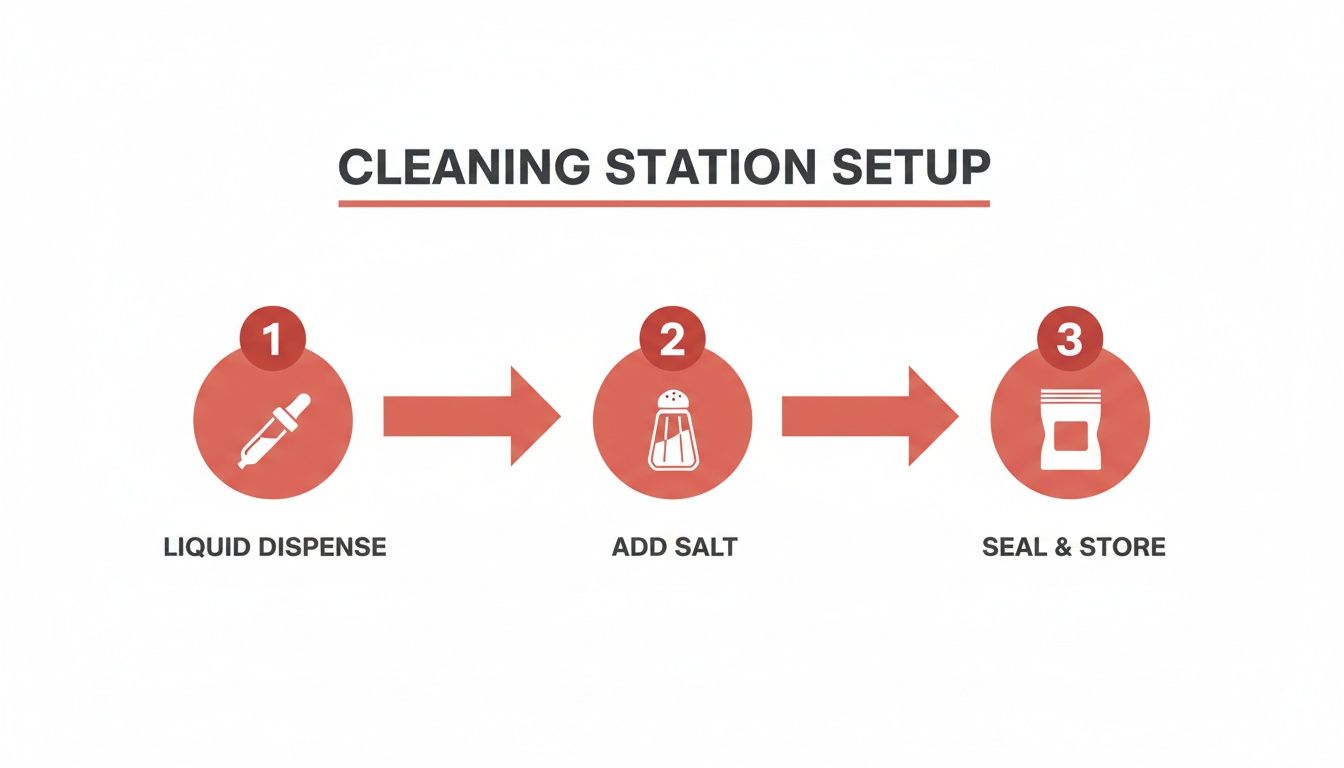
This visual guide shows the essential flow for prepping your cleaning station. Having these items organized and ready to go makes the entire experience quicker and a whole lot cleaner.
The first move is always a hot water rinse. This isn't about getting it perfectly clean—it's about knocking loose all the fresh, surface-level gunk. Just run your bowl under the hottest tap water your sink can produce for about a minute.
This quick prep step lets the alcohol and salt focus their power on the tougher, older layers of residue instead of wasting energy on the easy stuff. It’s a small detail that makes a huge difference.
Once rinsed, gently tap out any excess water. You don’t want to dilute the isopropyl alcohol, which would weaken its power as a solvent. A few quick shakes should do the trick.
Now, let’s mix the magic. Place your bowl inside a heavy-duty, resealable plastic bag. A freezer bag is perfect here because it's way less likely to tear or leak when you start shaking.
Pour in enough 91% or 99% isopropyl alcohol to completely submerge the bowl. This higher concentration is critical; standard 70% alcohol has too much water and just won't dissolve resin as effectively. Next, add a generous amount of coarse salt—about two or three tablespoons should be plenty.
Expert Tip: Epsom salt or coarse sea salt are your best friends for this job. Their large, jagged crystals act like a powerful but safe abrasive, scouring the inside of your bowl without scratching the glass. Fine table salt will just dissolve and won't give you that scrubbing action you need.
With the cannabis industry hitting $57 billion in 2023 and projected to reach an incredible $444 billion by 2030, more people are focused on clean consumption. For health-conscious users, proper maintenance isn't optional. For a truly deep clean, let the bowl soak for at least 30 minutes. Surveys show 70% of regular users clean weekly to avoid the 20-30% potency loss that comes from heavy residue buildup.
With your bowl, alcohol, and salt sealed securely in the bag, it’s time to get to work. Grip the bag firmly, double-check that the seal is tight, and shake it vigorously for one to two minutes. You'll immediately see the alcohol turn a murky brown as the salt scrubs the resin clean off the walls.
After the initial shake, let the bag sit for another five to ten minutes. This gives the alcohol time to dissolve any remaining stubborn spots. If your piece was especially dirty, you might want to repeat the shaking process one more time for good measure. This technique is just as powerful for other glass pieces; our guide on how to clean bubblers uses this exact same method.
Finally, carefully remove the bowl from the bag and pour the dirty solution down the drain. Rinse the bowl thoroughly under warm water until every last trace of salt and alcohol is gone. Let it air dry completely before its next use, and you'll be rewarded with a sparkling-clean piece that looks and hits like new.
If you're out of isopropyl alcohol or just prefer to skip it, don't worry. You've got powerful, alcohol-free cleaning options right in your kitchen. These methods are surprisingly effective, relying on simple science to get your bowl sparkling clean.
Whether your piece is glass, metal, or ceramic, these techniques will cut through the grime and restore it. It's all about picking the right tool for the job based on your bowl's material and how much resin you're dealing with.
For a seriously deep clean on glass and metal bowls, the boiling water method is a classic for a reason. It uses pure heat to melt and loosen even the most stubborn, caked-on residue without a single chemical.
But you have to be careful. The biggest risk here is thermal shock—a sudden temperature change that can crack or even shatter glass. The secret is to heat the bowl with the water, not after.
Here’s the safe way to do it:
As the cannabis market evolves, it's interesting to see how cleaning habits are changing. For instance, 80% of vape fans say their devices are cleaner than traditional pipes, often because all-in-one designs like Melt's AMF Blends can cut cleaning frequency by 50%. For old-school bowls, though, boiling remains a top-tier method, proven to remove up to 95% of buildup and still loved by 60% of users in recent surveys. You can check out more stats on the global cannabis market.
Critical Warning: Never, ever drop a cold glass bowl into hot water or a hot bowl into cold water. That jarring temperature shift is exactly what causes glass to crack. Patience is your best friend with this method.
Your pantry is probably hiding some seriously effective cleaning agents. Simple, non-toxic acids are fantastic for breaking down sticky resin through basic chemical reactions, giving you a great alternative to harsh solvents.
The Vinegar & Baking Soda Trick
This classic combo creates a fizzing reaction that does the scrubbing for you. The acid in the vinegar reacts with the baking soda, creating bubbles that agitate and loosen grime from inside your bowl. Just put your piece in a bag or container, coat it with baking soda, and then slowly pour in some white vinegar. Let it soak for at least an hour before giving it a good rinse with warm water.
Lemon Juice & Salt Scrub
If you want a more hands-on approach, a paste made from lemon juice and coarse salt works wonders. The citric acid in the lemon helps dissolve the resin, while the salt acts as a natural abrasive to scrub it all away. This is perfect for hitting stubborn spots with a pipe cleaner or Q-tip. Mix them into a thick paste, slather it on the dirty areas, and scrub until it's clean.
Deep cleaning is great for a total reset, but the real secret to avoiding a major scrub-down is building a few simple habits. Good maintenance is all about stopping heavy resin buildup before it even starts, making sure every session is as fresh and flavorful as the last.
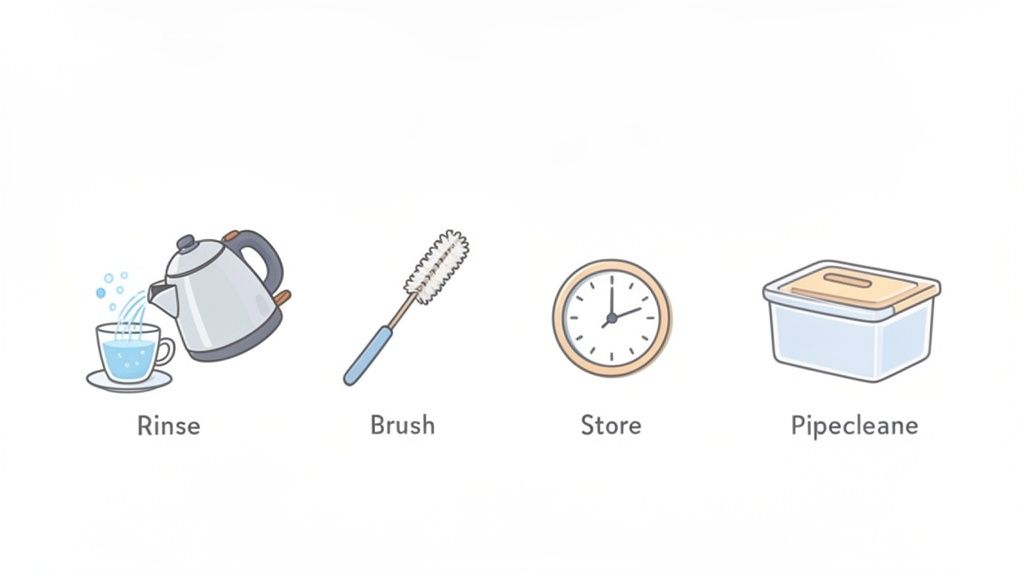
Just a few minutes of care each day can completely change your smoking experience. It's the difference between a quick rinse and a full-blown restoration project with stubborn, caked-on gunk.
The single most effective habit you can build is cleaning your bowl right after it cools down. Fresh resin is so much easier to remove than old, hardened tar. Seriously, this one-minute trick makes all the difference.
Your new routine can be as easy as this:
This minimal effort keeps your piece in a constant state of almost clean, preserving taste and airflow with practically no work.
A clean bowl starts with how you prepare your flower. For tips on achieving the perfect consistency that leads to a cleaner burn and less residue, check out our guide on how to properly grind your flower.
Let's be real—not everyone needs the same cleaning schedule. The trick is to match your maintenance routine to how often you actually use your piece. A daily smoker needs a different game plan than someone who only lights up on the weekends.
For the Daily User:
A daily hot water rinse and a quick swipe with a pipe cleaner is non-negotiable. Plan on doing a full alcohol-and-salt deep clean at least once a week to keep your bowl hitting smooth and tasting great. This stops the gunk from getting out of hand with frequent use.
For the Occasional User:
If you’re only using your bowl a few times a week, that post-session rinse is still a fantastic habit. You can probably stretch your deep cleans to every two or three weeks. The main goal here is to never let the resin get so thick that it completely hardens between sessions.
Proper storage also plays a bigger role than you’d think. Keeping your piece in a case or a designated clean, dry spot protects it from dust and other random debris. It’s a simple move that ensures your bowl is always ready for a clean, flavorful hit whenever you are.
Even after you've got the basics down, a few questions always seem to pop up. Don't worry, you're not the only one wondering about the little details. Getting them right is what separates a pretty good clean from a perfect one.
We've pulled together the most common snags and "what if" scenarios people run into. Think of this as your go-to guide for troubleshooting your cleaning routine.
Honestly, it all comes down to how much you use it. If you're a daily smoker, a quick rinse with hot water after you’re done for the day is a total game-changer. It prevents that sticky film from building up in the first place.
Then, once a week, give it a full alcohol-and-salt deep clean. This keeps your bowl looking brand new and makes sure your flavor stays pure. If you only use your piece a few times a week, you can probably stretch that deep clean to every two or three weeks. The real trick is to clean it before the resin gets thick and hard—that’s when it really starts to ruin the taste of your flower.
You can, but it’s not going to do much. The real magic of the deep clean comes from the friction of coarse salt. Its big, chunky crystals act like a tiny, powerful scrubber inside your bowl, physically scraping off all that stubborn, sticky gunk.
Fine table salt just dissolves into the alcohol almost instantly, so you lose all that scrubbing power. Without that abrasive action, you’re just relying on the alcohol to do the heavy lifting, and it's rarely enough for serious buildup.
That's a hard no. Isopropyl alcohol is way too aggressive for porous materials like wood or delicate ones like acrylic. It will absolutely strip the finish off a wooden pipe, causing it to dry out, get brittle, and eventually crack.
For acrylic pieces, alcohol is just as bad, if not worse. It can cause a whole host of problems:
Stick to warm, soapy water or grab a cleaner specifically made for these materials. It’s not worth destroying your favorite piece.
Don't sweat it. If you’re cleaning a piece that’s seen some serious action, one round might not be enough. For that truly caked-on, stubborn resin, a second pass is often the answer.
Just dump out the dirty, brown cleaning solution and start fresh with a new batch of isopropyl alcohol and coarse salt. If it's really bad, let it soak. Letting the bowl sit in the fresh mixture for a few hours—or even overnight—gives the alcohol time to penetrate and break down those ancient layers of resin. After a good long soak, they’ll be much easier to shake and scrub away.
At Melt, we know a clean piece is the key to a great session. To experience bright, juicy California flavors with pure, strain-specific terpene profiles, check out our curated collection of high-quality cannabis products at https://meltofficial.com.
Your cart is currently empty.