


Free Edibles at $95 & Free 2X Edibles at $139
When counting sheep just won’t cut it, the right indica strain can feel like a godsend. The best ones for sleep are often loaded with sedative terpenes like myrcene and linalool, which are known for delivering a heavy, full-body high.
This signature effect quiets a racing mind and melts away physical tension, making it much easier to drift off into a deep, restorative night’s rest.
For years, the old rule of thumb was simple: "indica for in-da-couch" and "sativa for soaring energy." While that’s a decent starting point, the real reason some strains knock you out is far more interesting. The secret is something called the entourage effect.
Think of a cannabis strain like a symphony orchestra. THC, the main psychoactive cannabinoid, is the lead violin—it sets the main tune. But the true richness and emotional power of the music come from the entire orchestra playing together in perfect harmony.
In this case, the supporting instruments are terpenes, the aromatic compounds that give a strain its unique scent and flavor. It’s the specific blend of cannabinoids and terpenes working in concert that creates that perfect, sedative melody for bedtime.
This powerful synergy is why the deep "body high" from an indica feels so different from the energetic, cerebral buzz of a sativa. Certain terpenes, which we'll get into later, are known for their calming and muscle-relaxing properties.
When they team up with THC, they amplify its sedative potential, creating an effect that’s much greater than what any single compound could achieve on its own.
This isn't just stoner lore, either. A 2021 study analyzed over 24,000 real-world cannabis sessions and found that indica-dominant strains were the top choice for managing insomnia, accounting for 38.29% of all sessions tracked. The data confirmed that indicas significantly outperformed both CBD and sativa strains in promoting sleep. If you want to dive into the numbers, you can read the full study on cannabis and insomnia management to see the detailed findings.
The entourage effect is the key to unlocking a strain's true potential for sleep. Don't just focus on THC percentage; look at the complete chemical profile to understand how a strain will truly make you feel.
Understanding this helps you look beyond basic strain names and make smarter choices. To help you find the best indica strains for sleep, let's break down the key characteristics to look for.
To make your search easier, we've summarized the most important factors to consider when choosing an indica for better sleep. This table breaks down what to look for and why it matters.
| Characteristic | What to Look For | Why It Matters for Sleep |
|---|---|---|
| Cannabinoid Profile | High THC with some CBD or CBN | THC promotes sedation, while CBD/CBN can enhance relaxation and prolong sleep. |
| Terpene Profile | High in myrcene, linalool, and caryophyllene | These terpenes are known for their calming, sedative, and muscle-relaxing effects. |
| Potency | Moderate THC levels (15-20%) | High enough for effective sedation without causing anxiety or a "THC hangover." |
| Consumption Method | Inhalation (vaping) or edibles | Vaping offers a fast onset for immediate relief, while edibles provide long-lasting effects. |
Looking at these characteristics together gives you a complete picture of a strain's potential to help you get the rest you need.
If cannabinoids like THC are the lead guitar in a rock band, terpenes are the rhythm section—the bass, drums, and keys that create the actual mood of the song. These aromatic compounds are the real heroes behind a strain's unique scent, flavor, and, most importantly, its specific effects.
Think of it this way: THC gets the party started, but terpenes decide if it’s going to be a mellow, chill hangout or a high-energy dance-off. When it comes to sleep, terpenes steer the experience toward deep relaxation and calm.
This is the beautiful harmony of the plant at work—cannabinoids and terpenes playing together to create a powerful, unified effect.
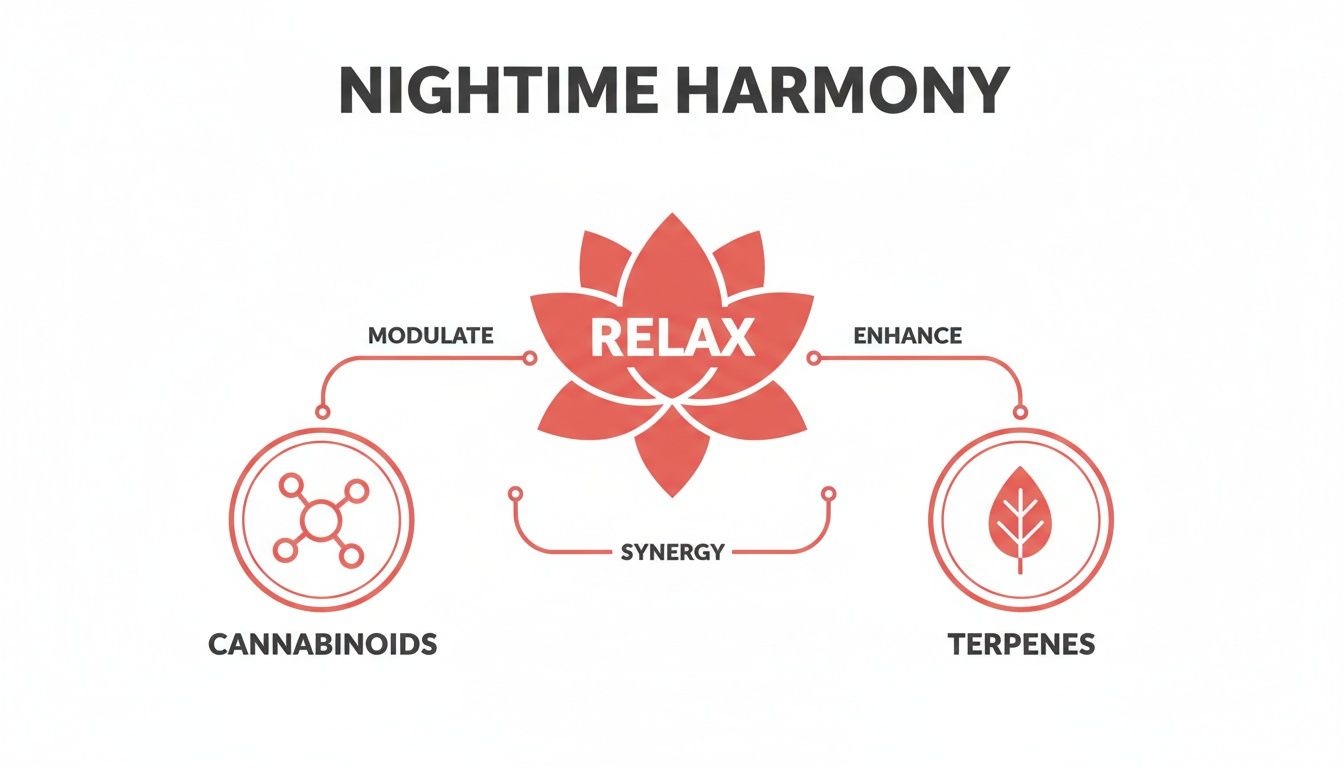
As you can see, hitting that perfect state of nighttime harmony isn't about a single compound. It’s all about the synergy.
When you're hunting for the best indica strains for sleep, understanding the terpene profile is your secret weapon. Sure, there are hundreds of them out there, but three consistently pop up when it comes to deep, restful slumber. Learning to spot these on a lab report will change the game.
Myrcene: This is the heavy-hitter, often called the "couch-lock" terpene. With an earthy, almost musky aroma, myrcene is famous for its powerful sedating effects. It helps relax muscles and quiet a racing mind, making it way easier to drift off and stay asleep.
Linalool: If you’ve ever used lavender to relax, you already know linalool. This floral compound is celebrated for its serious anti-anxiety and calming vibes. It melts away stress and tension, paving the way for a truly restorative night.
Caryophyllene: Found in black pepper and cinnamon, caryophyllene has a spicy, peppery scent. What makes it so special is that it interacts with your body's endocannabinoid system, much like cannabinoids do. It's a rockstar at reducing physical discomfort and inflammation—two common culprits that keep you tossing and turning.
Looking for strains rich in these three terpenes helps you move beyond just THC percentage. You start choosing products based on their complete chemical fingerprint, which leads to much more predictable and effective results for your sleep.
The specific mix of these terpenes also shapes a strain's flavor. For those who enjoy vaping, getting to know these aromatic notes can seriously upgrade the whole experience. You can dive deeper into how these compounds influence taste in our guide to different vape pen flavors.
Okay, so you've got the basics of cannabinoids and terpenes down. Now, let's see how that science plays out in the real world with a couple of legendary indicas. Theory is great, but connecting it to actual strains you might encounter is how you really learn to spot a winner for your specific sleep needs.
We'll break down two absolute powerhouses of the nighttime scene. By looking at what makes them tick, you'll start to recognize the patterns that signal a truly effective sleep strain.
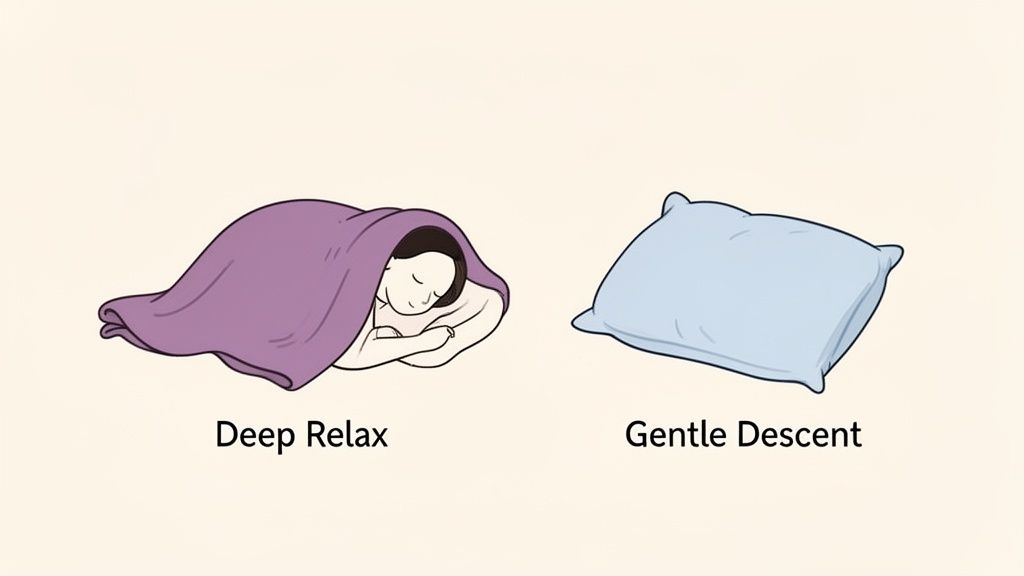
Granddaddy Purple, or GDP, is a household name for good reason. Imagine wrapping yourself in a warm, heavy blanket on a cold night—that’s the quintessential GDP experience. It’s famous for a profound physical relaxation that feels like it’s sinking right into your muscles, quieting aches and melting away the day's stress.
That signature sweet grape and berry aroma? It comes from a terpene profile dominated by myrcene. This high myrcene content is the engine behind its powerful sedating effects, making it a go-to for anyone who feels physically restless or tense before bed.
Born in California back in 2003, GDP is a true sleep savior. With THC levels that can range from 12.5% to 32%, its potent effects aren't just talk. One major strain database shows 85% of users report a heavy body sensation. It’s a commercial beast, too—dispensary data from Los Angeles shows GDP accounted for 22% of all indica sales for nighttime use in 2024. If you want to dig deeper into this, the Sleep Foundation offers great insights into cannabis and sleep. Strains with similar profiles, like our sun-grown Purple Kush Indica THCA flower, are often bred to capture that same deeply relaxing, body-heavy vibe.
While GDP feels like a heavy, weighted calm, Northern Lights offers a different path to dreamland. Think of it more like a gentle, blissful descent into a peaceful state of mind. This strain is celebrated for its ability to soothe a racing mind and ease anxiety without the couch-lock that some people want to avoid.
The experience is often described as euphoric and dreamy. It doesn't knock you out; it guides you softly toward sleep.
Northern Lights is perfect for nights when mental chatter is the biggest hurdle. Its effects are deeply calming, creating a serene mental space that lets sleep come naturally.
Its distinct piney, earthy aroma comes from a terpene blend rich in myrcene but also pinene. The pinene helps balance the sedative side, promoting a clear-headed tranquility that keeps you from feeling groggy or "out of it."
By comparing these two classics, you can see how different chemical cocktails create totally unique experiences. Whether you need a "heavy blanket" to soothe your body or a "gentle descent" to calm your mind, understanding these profiles helps you make a much smarter choice for a better night's rest.
Okay, so you’ve found an indica strain that looks promising. The next piece of the puzzle is deciding how you're going to use it. This choice is just as critical as the strain itself because it controls how fast you feel the effects and how long they last, completely shaping your nighttime experience.
Think of it like this: vaping THCA flower is the sports car of cannabis consumption. It gets you to your destination—in this case, relaxation—almost instantly. Edibles, on the other hand, are the cross-country bus. The trip takes a while to get going, but once it does, you’re settled in for hours.
Your specific sleep struggle should be your guide here. Do you have trouble switching your brain off to fall asleep in the first place? Or is your problem waking up wide awake at 3 AM? Each one calls for a different tool.
Getting a handle on onset times and duration is everything when you're trying to build a routine you can count on. If your mind starts racing the second your head hits the pillow, you need something that works fast. That's where inhalation methods are a game-changer.
Vaping, for instance, sends cannabinoids straight to your bloodstream through your lungs, and you'll typically feel the effects within 5 to 15 minutes. That rapid response is perfect for shutting down mental chatter and easing into a calm state right when you need it. If you're new to this, our guide on how to vape weed is a great place to start.
Now, if staying asleep is your real battle, you need something with staying power. This is where edibles like gummies or softgels are in a league of their own. Since they travel through your digestive system, it can take 45 to 90 minutes to feel them, but the effects can last for six hours or more, carrying you peacefully through the night.
The Golden Rule: Start Low and Go Slow No matter what you choose, the best advice is always to start with a small dose. You can always take a little more, but you can’t go back and take less. This simple approach helps you find that sweet spot without overdoing it, ensuring a comfortable and restorative night.
To make this decision even clearer, we've put together a simple breakdown of the most common ways to use cannabis for sleep. Each method offers a different experience, so aligning your choice with your sleep goals is key.
| Method | Onset Time | Duration of Effects | Best For |
|---|---|---|---|
| Vaping | 5-15 minutes | 2-4 hours | Quickly falling asleep and quieting a racing mind. |
| Edibles | 45-90 minutes | 6-8+ hours | Staying asleep all night without waking up. |
| Tinctures | 15-45 minutes | 4-6 hours | A balance of fast onset and moderate duration. |
By being strategic about your product choice, you can create a reliable ritual that helps you get the rest you deserve. This turns your search for the right indica into a truly personalized plan for better sleep.
Finding the right indica is a huge step, but even the best strains work better when they’re part of a consistent nighttime routine. Think of it less like taking a product and more like creating a ritual. Your environment—what experts call "set and setting"—plays a massive role in getting your mind and body ready for deep rest.
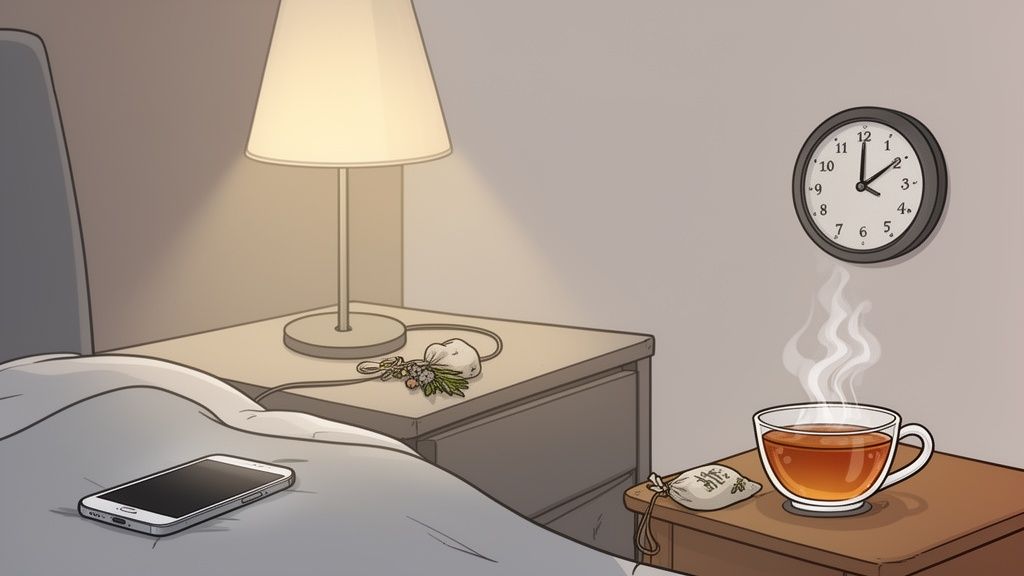
The goal is simple: send your brain clear signals that it’s time to power down. This means creating a buffer zone between your busy day and your bed. An hour before you plan to sleep, start winding down with intentional, calming activities.
This process doesn’t need to be complicated. Small, mindful adjustments can make a world of difference and help your chosen product work its magic. Start by weaving these simple steps into your evening.
This deliberate approach turns cannabis from a simple fix into a powerful tool that enhances a healthy, restorative routine. For example, the legendary pure indica Northern Lights is famous for delivering knockout sleep with its 16-21% THC and myrcene-pinene terpene profile. Research shows that users consuming indica strains like Northern Lights were 2.5 times more likely to report "excellent" sleep quality compared to those using hybrids. You can find more insights on top indica strains for sleep.
A successful bedtime ritual is all about intention. It’s the conscious decision to slow down, create a peaceful space, and give yourself permission to truly rest. This mindful practice leads to more predictable and satisfying results, night after night.
Jumping into the world of cannabis for sleep can feel a little overwhelming. Even when you get the science, practical questions about what’s legal, what to expect, and how to choose the right product at the dispensary always pop up. This section is here to give you clear, straightforward answers.
We'll cover the most common questions, from the deal with THCA's legality to what to do if a strain makes you feel the opposite of relaxed. The goal is to give you the confidence to build a safe and effective sleep routine.
Yes, THCA can be a fantastic sleep aid, and it exists in a unique legal gray area. THCA (tetrahydrocannabinolic acid) is the raw, non-psychoactive compound found in fresh cannabis. It only becomes the psychoactive THC you're familiar with when you heat it up—a process called decarboxylation.
So, when you smoke or vape THCA flower, you're converting it into THC and getting those same sleepy, relaxing effects. Legally, the 2018 Farm Bill made hemp-derived products legal as long as they contain less than 0.3% Delta-9 THC. Since THCA flower fits this description, it's federally legal in many places. Just be sure to double-check your local state laws, as they can differ.
It's a valid concern. While cannabis generally has a lower dependency risk than prescription sleep meds, it is possible to become psychologically reliant on it. If you use it every single night, your brain can get used to it, making it tougher to drift off on your own.
This isn't a physical addiction but more of a mental one—you feel like you need it to unwind. To keep things in check, try these tips:
It happens, and it’s usually a sign that the dose was too high or that particular strain's chemistry just didn't vibe with yours. High-THC strains, in particular, can sometimes kick the nervous system into overdrive for some people, leading to anxiety or a racing heart.
If you ever feel anxious, the first thing to remember is that it’s temporary. Find a quiet spot, take some slow, deep breaths, and remind yourself the feeling will pass. It also helps to have some CBD on hand, as it’s known to gently counteract THC's intensity.
To avoid this next time, always start with a very low dose. Seriously, just one puff. Stick to strains with moderate THC levels (around 15-20%) and look for those with calming terpenes like linalool and caryophyllene.
A lab report, or Certificate of Analysis (CoA), is your secret weapon. Don't just rely on a cool strain name or a high THC number. The CoA gives you the full picture.
Here’s what to zero in on:
Ready to put your new knowledge to use? The curated collection at Melt is all about transparency and quality. Every product includes a detailed lab report, so you can see the exact cannabinoid and terpene profile before you buy. It’s all about empowering you to find the perfect match for your nighttime ritual. Explore our collection of premium THCA flower and other sleep-friendly products today.
Your cart is currently empty.